The Bachchao Project is a techno-feminist collective that undertakes community-centric efforts to develop and support open source technologies and technical frameworks with the goals of mitigating gender-based violence and working towards equal rights for women, LGBTQIA people, and gender non-conforming groups. We conduct research and advocacy in all the above areas and guide communities in determining appropriate technological interventions for themselves.
The Bachchao Project conducted a training of trainers for women, trans* and queer individuals, and those belonging to the LGBTQIA+ spaces. The people for the training were chosen from a closed call spread in various underrepresented communities. Nine trainees were initially chosen, out of which six trainees completed their training. Five among them went on to do the Safe Sisters fellowship program with The Bachchao Project.
The Bachchao Project, in partnership with Safe Sisters, conducted the India Fellowship Program from August to November 2021. This cohort included 5 fellows, shortlisted for their diverse areas of work with at risk and/or underserved communities, who by the very virtue of their identities are exposed to many unique risks.
An initial training period allowed the fellows to begin understanding and responding to security challenges they may face in their work and daily life. The aim of the program was to enable them to secure themselves, and pass on these learnings in the communities they work in. The focus was on holistic security practices rather than tool usage, and fellows underwent activites on needs assessment, risk assessment and threat modelling, before moving to possible interventions.Since the fellowship was based in India, the initial training was localised to the country, as far as possible. We also held a session with prior safe sisters fellows from other countries, to underline the feeling of community and support. As the fellows spoke to each other, common interests became apparent, and resources and advice was exchanged.
The common thread that bound everyone together was the sharing of stories of online harassment, lack of access to justice and the positive impact that fellows could see their work having, especially in under served communities. Fellows also exchanged notes on challenges faced while training diverse stakeholders and underlined the importance of being mindful of our own biases and shortcomings as individuals that we may carry into the training space. This highlighted again that without being inter sectional in every aspect of our work -including how we speak, train and otherwise engage with different communities.
After the initial training period, we conducted additional trainings for fellows who wanted more information on certain topics. The fellows were encouraged to set up their trainings while keeping the fellowship trainers in the loop. We held follow up calls for all the fellows and discussed their plans for the communities they work with, and assisted them in the setting up of workshops, if they required help. All of the fellows successfully carried out needs assessments for their target groups, and were able to carry out trainings where required. They can now take back this knowledge and skill to their communities.
AK:
“Given the current pandemic, when more and more people are online and internet is used in a variety of ways – I feel I have benefited immensely by the fellowship as it has not only made me understand how to be safe in the digital space but also empowered me to help others from more vulnerable communities and spaces. The fellowship helped me understand how to give support in a structured fashion and I am equipped to assist others in being equipped and safe in the digital world. While firefighting skills are necessary but its much better to take certain precautions from the beginning in-order to minimise risk.”
Arunima N:
“The module on online dating and gender-based violence was entirely new to me. I liked the tools we were given to express ourselves in the context of dating while keeping parts of our digital identity safe from being mined by dating companies. I also like that conversations we had as a part of this module, particularly on communicating to a potential romantic partner why digital privacy is important to you, and to see if the other person respects this principle of ours. That was a personally illuminating conversation to witness, between the trainers […] and the participants”
Brindaalakshmi K:
“Most importantly, I’m grateful for the space that we had as fellows during the course of this fellowship to ask questions and ask for extra resources. It was a safe learning environment. Feeling safe in a learning environment is a high priority for me while learning anything. I appreciate the patience and the effort of the trainers in always holding space for the fellows. That made a huge difference to me especially while learning tools that are absolutely new. It made the process less intimidating”
“I have had many learnings from this fellowship, not one. But the most important lesson that I have learnt is that digital security and consciously practicing safer methods is a way of life and a lifestyle change. It is taking me time and I cannot expect the people that I do workshops for to change their habits overnight. Over time, I have known this even through my work. But this fellowship has made me realise that digital security doesn’t have to be a dark and bleak thing. We as individuals have more power than we realise even while using automated technology, which often feels larger than life to most people. Many generations of people are still adjusting to using technology. Safety rests in recognising this power that we hold and making conscious choices”
Ravalisri V:
“The 2 days program on using dating applications is one of the major learning. It provided a platform to share our experiences and all the safety measures to be taken while using them along with what is a necessary action to be taken when someone faces problems from others”.
Chinmayi Shrivastava :
“A fantastic experience!
In addition to all the insights I gained on digital security, I have also walked away with a newfound confidence for digital security challenges that I might face in the future in my work and daily life. Having practised the tools myself along with the training sessions conducted as part of the Safe Sisters fellowship, I definitely feel more secure online which is the first step for me to conduct my daily work related and personal activities online without being scared and anxious at the thought of losing my data or my data ending up in the wrong person’s hand.”
The Bachchao Project in partnership with OONI hosted an online event on 9th and 10th October 2021 to update the Citizen Lab test list for India. The event, which was called “India, Lets build the list”, was organised to help strengthen community based monitoring of internet censorship in India. The event allowed experts from different fields to contribute to a curated list of websites that are relevant to India and which are regularly tested for censorship by volunteers in India.
Censorship in India, specifically online, has been evolving steadily since the notification of the Information Technology Act of of 2000 and its associated rules. Though the Act itself offers multiple ways in which the Government can remove content and/or block access to content (including shutting down internet services), very little data is available to confirm if due process is regularly followed in these matters. This raises serious concerns about its impact on Indian citizens’ right to freedom of expression and access to information.
While many such blocked sites may fall in the expected categories of illegal streaming, adult content, file sharing etc., research has also shown that internet censorship in India also impacts a wide variety of other sites, such as news media and human rights sites.This list building and monitoring activity is therefore crucial for us as citizens and as a community of digtal rights practioners to safeguard the essence of a free internet and uphold the rule of law.
One open software project that aims to increase transparency of internet censorship (and other forms of network interference) around the world is Open Observatory of Network Interface (OONI). To this end, the project builds free and open source software – called OONI Probe – designed to measure various forms of network interference.
A recent study used the OONI Probe testing software to measure the blocking of websites in various states in India (such as Manipur and Bangalore) from January 2019 to January 2020. It found that while 136 sites from the Citizen Lab test list for India were confirmed to be blocked, the major decrepancies in access were between ISPs rather than between regions. A large number of media outlets seemed to be targeted for blocking as well.
As of now, a relatively small community in India reviews and contributes to the Citizen Lab test list for India, which means that it’s entirely possible that we are not looking at all the possible thematic areas in which website censorship may be happening.
It therefore becomes essential that more people from varied backgrounds and fields of interest support such open source testing for censorship. By reviewing and contributing to the the Citizen Lab test list for India, you can help ensure that a broad range of relevant websites are tested, and that the censorship measurement data collected from the testing of these websites is more comprehensive, robust, and timely. This will enable citizens to ask important questions to lawmakers and even mount legal challenges when necessary.
To this end, on Day 1 of our 2-day workshop, our OONI partners facilitated a session (“Introduction to Internet censorship”) which introduced participants to key concepts around internet censorship and how website censorship is implemented, with the goal of ultimately highlighting the importance of contributing to the Citizen Lab lists of websites that are measured for internet censorship. For the purposes of this workshop, the following forms of censorship were kept out of our scope:
Censorship on social media platforms
Internet outages/blackouts/shutdowns
Takedown requests
Online trolling
Self-censorship
We used these two days to specifically look at websites that may have been or could be at risk of being blocked by Internet Service Providers (ISPs) . The group discussed the recent history of internet censorship specifically related to blocking of sites under Section 69 (A) and Section 79 of the IT Act . We also reviewed existing research and public advocacy efforts with regards to internet censorship in India.
The concept of the Citizen Lab Global Test List and India Test List, both hosted on Github, was introduced to the group. These lists are compiled and maintained as a voluntary global effort to monitor websitecensorship. The India test list has over 600 URLs which fall under many of the Citizen Lab’s 30 standardized categories.
A review of this list showed that the list was not balanced in terms of URLs in each category. The list also needed an update based on recent events in the country. Our workshop was specifically aimed at rectifying this and making the list more comprehensive & inclusive of the myriad concerns of citizens of our country.
A few of the participants shared their own experience with state censorship and their work on these issues. One of them presented a list that they had compiled by testing for DNS hijacking of sites specifically on the ACT Fibernet. Another participant found that many official government websites are not accessible to people outside the nation and shared their own work on creating a proxy to allow researchers and others to access Indian government websites from other countries.Geo-blocking prevents archival by the Internet Archive, which many researchers depend on. Participants also shared their experience of studying the issue of internet access in conflict zones in India and that even though access to the internet is recognized as a human right, it is often on the very bottom of the priority list for communities who are facing very intense threats on the ground. They also shared that being able to help these communities understand that the role the internet can play in responding to some of the other threats they face (and the tools to enable this, while foregrounding their safety needs) had been a very positive, empowering experience for all involved.
To end Day 1, we dove into the methodology of list building and list pruning which was developed and presented to the group by our friends at Netallitica. This session was specifically aimed to prepare us for Day 2 during which we (the organizers and the attendees) split into groups and co-worked on updating the India test list.
We started Day 2 with practical inputs on how to make changes to this list, important points to remember so that anyone who looks at this list later to test or to clean it understands what changes have been made and why. Our partners from OONI also showcased their beta tool which will make updating the Citizen Lab test lists much easier (through a web platform, without requiring GitHub accounts), once it’s launched.
A total of 10 participants split into two online co-working groups and selected a single theme to work on for 30-minute hands-on sessions each. The participants selected themes based on their area of knowledge and interest and also on how much information the list for that theme already contained. The focus was to make each theme list cover a wider base making it representative of platforms/ sources of information/ interaction that are currently important in our country.
In each group there were discussions to decide which sites need to be added and/or removed, and how websites should be categorized . An important part of this exercise was to ensure that we are including sites that cater to various schools of thought so that the list is not skewed in its representation. This is important to do so that we can measure censorship across the board and not only of target sites that may be important to the world view of the people building and testing these lists.
Day 2 of the workshop resulted in the follow changes to the India test list :
Category Code (Name)
New URLs added
Updated to
HTTPS
Moved to Global list
Recommended for deletion
Domain Updated
Category Updated
ECommerce
7
1
0
3
1
0
LGBT
15
0
0
1
0
0
Human Rights
8
0
0
0
0
0
Environment
31
1
0
0
0
1
Public Health
26
1
0
1
0
0
News Media
11
0
0
0
0
0
Terrorism & Militancy
0
0
0
1
0
0
Culture
19
1
0
0
1
1
Hate Speech
0
0
0
0
0
0
Political Criticism
4
0
0
1
0
1
Government
1
0
0
0
0
0
Pornography
5
0
0
0
0
0
Total
127
4
0
7
2
3
The participants were able to significantly add to the categories of LGBT, Environment , Culture and Public Health which were very sparsely polluted earlier.
Accomplishing this took time and effort to ensure no sites were repeated, URLs were added correctly, and that existing URLs in the list were still relevant. Our workshop focused specifically on contributing new URLs and we did not specifically set out to prune the existing list (though some of us took the initiative to look at this aspect too). Here is the pull request for this update: https://github.com/citizenlab/test-lists/pull/864
At the end of workshop, participants and us as organizers were enthused by the amount of understanding built about the importance of community based monitoring of internet censorship and a huge role that people from all walks of like can (and in our opinion, should) play to help technologists and digital rights advocates around the world to stand guard over a free Internet.
We hope that this effort will give impetus to more people to engage in these sort of open source list building and testing activities that will enable the generation of in-depth and representative data on the true nature of the Internet that citizens in India get to experience.
Authors: Chinmayi S K and Rohini Lakshané*
The “Report on Telecom Consumer Rights Education Program (2018-2019)” presents the highlights from a year-long education program for women telecom consumers conducted by
the The Bachchao Project in Manipur from December 2018 to August 2019. This program was made possible with support from Internews.
This program was conceived as a result of our experiences and observations from the study “Of Sieges and Shutdowns”. This report elucidates on the objectives of the program, the programmatic activities we conducted, the curriculum and design of the consumer education workshops, and our lessons and challenges. We hope that this report will benefit similar endeavours in Manipur and in the field of
consumer education.
Rohini Lakshané and Mythri Prabhakara participated in the hybrid edition of the Asia Pacific Regional Governance Internet Governance Forum (APrIGF 2021), that is, the online conference as well as Local Hub activities held in Hyderabad, from 27 to 30 September 2021. Ms Prabhakara also received the APrIGF 2021 Fellowship, which has been documented in this report. They also attended the launch event of the Internet Society (ISOC) Chapter Hyderabad at the APrIGF Local Hub. They made several contributions to the APrIGF 2021 Synthesis Document.
Fellowship
Mythri Prabharakara received the APrIGF Fellowship, which ran from 1 August 2021 to 15 October 2021. It was an intensive fellowship involving courses, peer interaction, delivering talks and presentations, and receiving several hours of mentorship. The mentor assigned to Ms Prabhakara was Mr Eun Chang Choi.
She made two presentations: one on her professional interests in law, gender and tech feminist spaces and the other for the fellows cohort. She represented the fellows cohort and presented a summary of the mentorship program that happened as part of the fellowship on the final day of the APrIGF. The presentation included a summary of all assignments completed and presentations made by the group, an e-course on Internet governance offered by the ISOC Foundation, and mock session proposals made to the UN Internet Governance Forum. https://www.youtube.com/watch?v=bpCJISLJvOQ
Rohini Lakshané moderated a session entitled “The gendered impact of intentional Internet shutdowns” at the Global Digital Development Forum (GDDF) on 5 May 2021. The speakers were Felicia Anthonio (Access Now), Sandra Aceng (Women of Uganda Network), Deborah Brown (Human Rights Watch) and Zaituni Njovu (Zaina Foundation).
Description: Women, gender-diverse persons, and marginalised sections of society have been using the internet to overcome the obstacles posed by an imbalance of power and social restrictions. Internet shutdowns, a tool increasingly used by governments across the world, are depriving these populations of access to the ways in which the internet acts as a leveller. Our panelists represent researchers, advocacy, and policy groups exploring the impact of intentional internet shutdowns on women and gender-diverse persons in communities across Africa. They will speak from the perspectives of free and fair elections, cybersecurity, freedom of speech, and expression and digital rights, and discuss coping strategies these populations use when they are digitally disconnected.
Rohini Lakshané was a panelist at the event “Digital Speech, Disinformation, Censorship: Social Media and Democracy” organised by Tufts University and held on 23 February 2021. The panel was a part of the “Critical Times, Critical Thinkers” series of talks held by Tufts Global Education.
Description: “This panel will explore the role of digital technology as social experimentation, the controversial role of Big Tech in policing and censoring speech, and provide a dynamic discussion about EU regulation of Big Tech and the lack of it in the US. Special attention will be paid to exploring differences in the impact of these practices in the Global North and Global South, particularly the ways in which these practices may support rather than challenge authoritarian regimes in the Global South (e.g. India and Myanmar). Each speaker will offer 5 minute introductory remarks followed by a moderated discussion among all participants. Questions from the public are welcome!”
Speakers:
Rohini Lakshané, Director, Emerging Research, The Bachchao Project, Mysuru, India
Manuela Kasper-Claridge, Editor in Chief, Deutsche Welle, Berlin, Germany
Adam Moe Fejerskov, Senior Researcher, Danish Institute for International Studies
Moderator: Josephine Wolff, Assistant Professor of Cybersecurity Policy, The Fletcher School of Law and Diplomacy, Tufts University
Early this summer The Bachchao Project contacted Localization Lab to propose a localization sprint (with the support of DataMeet and Random Hacks of Kindness India) to address the language accessibility needs of users in India, particularly those of women and marginalized groups. With regular occurrences of online harassment, censorship, surveillance, internet throttling and all out shutdowns regularly occurring in India, The Bachchao Project selected a set of four tools to localize which would provide everyday users and human rights defenders alike with a basic digital security suite:
Safe Sisters (developed in Uganda by Defend Defenders and Internews for women and girls) was selected because it is one of few digital safety guides developed for women in the Global South, by women in the Global South. The guide was developed not only with a focus on the unique needs and concerns of internet users who are women, but also with an understanding of the different circumstances and constraints faced by users outside of Europe and North America.
Signal was chosen as an easy-to-use and already widely adopted messaging tool whose adoption could be increased through being made available in more local Indian languages (other than Hindi).
Psiphon was chosen as a secure and reliable circumvention tool which The Bachchao Project has successfully used in many environments (including low-bandwidth) in India and which is easy-to-use for new users.
Tella was selected as one of the only secure, open source and easy-to-use mobile documentation tools available. Human rights documenters in India are in need of an straight-forward tool that will allow them to document quickly from a mobile device and will work well through internet shutdowns and in low-bandwidth environments.
Often the assumption is that localization into Hindi or English will suffice for users across India. Most users do in fact access tech in Hindi or English, however neither is the first language of the majority of the population. While users are able to generally navigate mobile phones and desktops in a second language, they do not necessarily understand how these technologies work, the privacy and security risks associated with them, and tactics for accessing the open internet. To address this, the India Localization Sprint focused on localization into local languages other than Hindi, however not fully excluding it from the event.
While India and the rest of the world continue to struggle through a global health crisis, there is a need to collaborate, convene and build networks in safe ways. In order to achieve the lofty goals of localizing 4 digital security resources into a number of languages, The Bachchao Project and Localization Lab organized a virtual localization sprint to take place over the course of 2 weekends. The India Localization Sprint was hosted in 7-hour blocks with tool demos, localization discussion and collaboration as well as feedback and Q&A sessions with the developers and creators of the resources.
The sprint was widely advertised throughout November and received a total of 26 signups.
The Sprint
The first weekend of the India Localization Sprint launched on the last weekend of November with localization of the Safe Sisters Digital Safety Guide for Women and Girls and Psiphon for Android.
The first day of the event focused on the localization of Safe Sisters into Hindi, Marathi, Malayalam, Kannada, Konkani, Tamil, Manipuri and Assamese with a group of 13 attendees. Safe Sisters was highlighted for localization by The Bachchao Project (a techno-feminist collective serving women and gender minorities) because not only is it a guide developed by women for women, but it is one of the very few guides developed by women in the “Global South” and not form a European or North American perspective. The digital safety guide not only addresses women and girls and their unique digital safety needs, but originally developed for a Ugandan and East African audience, it keeps regional constraints in mind, many of which overlap with those faced by Indian users.
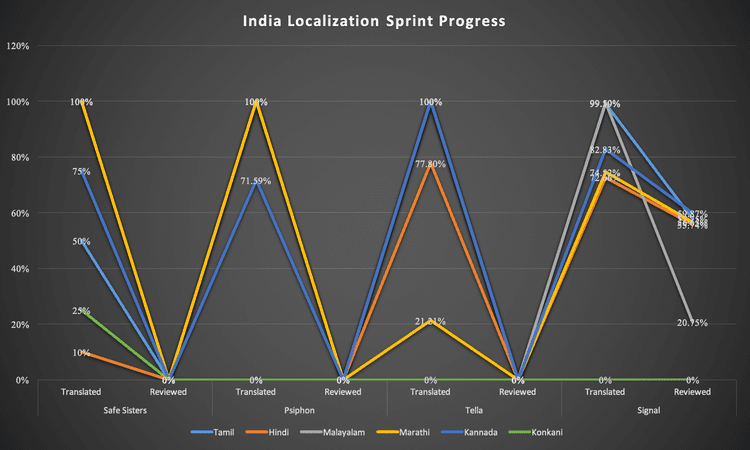
Helen Nyinakiiza from Defend Defenders joined us from Kampala, Uganda to start the sprint with an introduction to Safe Sisters and an overview of the unique approach used to create the guide – engaging a group of about 10 regional collaborators to communally develop the resource. The attendees then read through the full Safe Sisters guide in small groups, keeping an eye out for elements of the guide that would need to be added/removed/changed to make it most relevant for Indian audiences. Once consensus was reached over any changes and the groups had reviewed and solidified translation of key terminology used throughout the guides, participants dove into translating the guides in small groups by language. By the end of the event the Safe Sisters Guide was fully translated into Marathi, and Malayalam, with Hindi, Kannada, Konkani, Tamil, Manipuri and Assamese translations still in progress.
The second day of the sprint focused on localization of Psiphon for Android into Hindi, Marathi, Kannada and Malayalam with a group of 9 attendees. The event began with a presentation and Q&A with Keith McManamen of Psiphon who overviewed Psiphon, how it works and differs from other circumvention tools and most importantly, how Psiphon has been used in India in a period of increasing internet throttling and censorship. Psiphon was selected by The Bachchao Project for localization because a secure circumvention tool that is easy-to-use is essential in today’s India, a country which has had over 450 individual internet shutdown events in addition to long-term regional internet throttling. The Bachchao Project wanted a tool that would be usable and free for users in India, but would also be open source, not log identifying user information, and would actually work in India with differing regional internet connectivity.
After a meaningful presentation and Q&A with Psiphon, the day’s participants spent an hour overviewing a long list of technical terminology used throughout the Psiphon application. Prior to localizing the Psiphon Android app itself, participants worked in small groups – using resources like the Microsoft Terminology, Fuel terminology and Localization Lab Glossaries – to ensure all of the technical terms were understood and had agreed upon translations. By the end of the day, Psiphon for Android had been fully translated into Hindi, Marathi, Kannada and Malayalam.
The second weekend of the India Localization Sprint focused on localization of Tella and Signal, both for Android.
Day one launched with an in-depth live demo of Tella from Raphael Mimoun of the Horizontal team (developers of Tella), sharing how Tella has been useful for defenders around the world. Tella has the capability of securely collecting and storing audio, video and forms for documentation and reporting. Raphael overviewed all of Tella’s features and then fielded questions from participants about how Tella would work in an Indian context. The Bachchao Project chose Tella because it is a useful documentation tool for defenders and journalists alike and participants were particularly pleased to hear about Tella’s icon “camouflage” feature and ability to work offline and with low-bandwidth. Raphael also shared more in-depth information about how form templates can be created using tools like KoBoToolbox in order to deploy surveys with Tella.
After the demo and Q&A, participants again reviewed the glossary to be sure that relevant technical terms were first understood and translated and then the group of 8 attendees dove into translation of Tella for Android into Hindi, Kannada, Marathi, Malayalam and Tamil. By the end of the event Tella was translated fully into Kannada, Malayalam and Tamil with translations into Marathi and Hindi in progress.
The Last day of the India Localization Sprint was focused on Signal. Signal is a popular secure communication application used all over India and the Signal team has recently focused on translations into Indian Languages. The Bachchao Project wanted to support this effort further by updating and contributing to existing translations. As for other tools, the first goal for the Signal sprint was to review key technical terms and make sure that they were solidified in the glossary. Unlike with other projects which had no prior translations, the participants utilized features in the Transifex (the translation platform) to review existing translations and make sure the glossary was consistent with prior translations and highlight inconsistencies. Overall, 11 translators joined to contribute to Singal Android translations into Hindi, Kannada, Marathi, Malayalam and Tamil and by the end of the day, significant progress had been made updating the Android app across all of the languages with Malayalam and Tamil almost 100% updated.
To end the day and the India Localization Sprint, Riya from Signal Group joined the event to answer questions from the attendees about Signal Groups and other upcoming new features, and – maybe most importantly – Signal’s plans for increasing outreach and adoption of Signal in India.
After four days of collaboration contributors fully translated or made significant progress across all four projects, and we are now looking for volunteers to help us finish the effort. Are you interested in helping translate or review one of the following projects? Contact us!
Safe Sisters
The Bachchao Project is looking forward to using Safe Sisters to train its partners. As a part of that effort they are looking to share the completed guides in 2021 in open access and set up training calls for its partners. The Safe Sisters guides need some more translations for this to be possible.
Review Needed: Hindi, Kannada, Konkani, Malayalam, Marathi, Tamil
If you are an organisation which works with women on grassroots issues. Please contact Chinmayi (The Bachchao Project) if you would like a training.
Psiphon
The Psiphon team will be deploying the translations that are ready in Hindi, Marathi, Malayalam, and Kannada with a forthcoming update of Psiphon Android (date TBA). In the meantime, translators and reviewers can also sideload this version to be able to check the translations in-context, by selecting the relevant language under Options > More Options > Language or by setting their device language accordingly. Language setting instructions can be found here.
Translation Needed: Kannada
Review Needed: Hindi, Kannada, Malayalam, Marathi
Tella
Tella will be deploying the translations in four languages – Hindi, Kannada, Malayalam and Marathi – once all strings are translated and reviewed in these four languages.
Translation Needed: Hindi, Marathi
Review Needed: Hindi, Kannada, Malayalam, Marathi
Signal
The translations provided for Signal are automatically included in bi-weekly (sometimes less frequent) builds. There are more strings that need translation in Signal. The Signal team has also created teams for Assamese and Manipuri in Transifex which were previously unavailable for translators.
Translation Needed: Hindi, Marathi
Review Needed: Hindi, Kannada, Malayalam, Marathi
Note: This blog post has been jointly written and published by The Bachchao Project and Localization Lab
Mythri Prabhakar of The Bachchao Project attended the virtual edition of the Asia Pacific School of Internet Governance (APSIG) held in November 2020. She received a fellowship from APSIG to attend the school.
Rohini Lakshané was one of the speakers at the Roundtable on Internet Shutdowns organised by the Indian Institute of Management, Bangalore (IIM-B) and Software Freedom Law Centre (SFLC) on November 11, 2020. The roundtable was a part of Technology and Society Series hosted by SFLC and the Centre for Software & Information Technology Management at IIM-B. Details of the event: https://www.iimb.ac.in/index.php/iimb-csitm-host-internet-shutdowns
The other speakers at the roundtable were Prof. Rajeev Gowda, former Member of Parliament and former faculty, IIM Bangalore; Anuradha Bhasin, Editor, Kashmir Times; and Prasanth Sugathan, Legal Director, SFLC. Prof. Neena Pandey, faculty, IIM Visakhapatnam moderated the session.
Rohini Lakshané co-moderated a session entitled “Not “revenge porn”: New trends in non-consensual intimate imagery in Uganda & the role of digital security” at RightsCon Online. The session was held on July 28, 2020. The speakers were Sandra Aceng and Patricia Nyasuna of the Women of the Uganda Network, Judith Heard (Founder, Day One Uganda), and Joan Katambi (Assistant Lecturer, Uganda Institute of ICT). Peace Oliver Amuge (Program Manager, Women of Uganda Network) was a co-moderator.

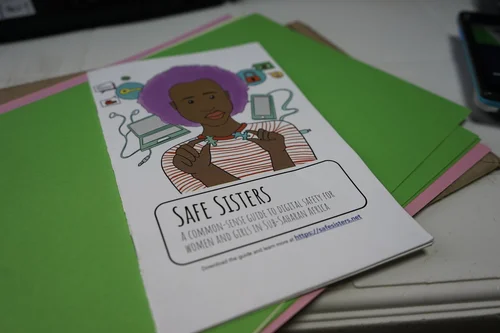 The first day of the event focused on the localization of Safe Sisters into Hindi, Marathi, Malayalam, Kannada, Konkani, Tamil, Manipuri and Assamese with a group of 13 attendees. Safe Sisters was highlighted for localization by The Bachchao Project (a techno-feminist collective serving women and gender minorities) because not only is it a guide developed by women for women, but it is one of the very few guides developed by women in the “Global South” and not form a European or North American perspective. The digital safety guide not only addresses women and girls and their unique digital safety needs, but originally developed for a Ugandan and East African audience, it keeps regional constraints in mind, many of which overlap with those faced by Indian users.
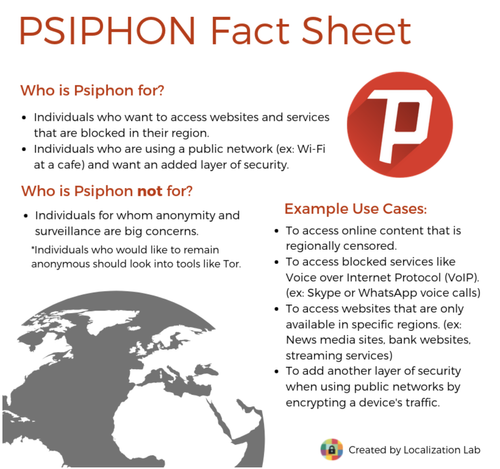 The second day of the sprint focused on localization of Psiphon for Android into Hindi, Marathi, Kannada and Malayalam with a group of 9 attendees. The event began with a presentation and Q&A with Keith McManamen of Psiphon who overviewed Psiphon, how it works and differs from other circumvention tools and most importantly, how Psiphon has been used in India in a period of increasing internet throttling and censorship. Psiphon was selected by The Bachchao Project for localization because a secure circumvention tool that is easy-to-use is essential in today’s India, a country which has had over
  After the demo and Q&A, participants again reviewed the glossary to be sure that relevant technical terms were first understood and translated and then the group of 8 attendees dove into translation of Tella for Android into Hindi, Kannada, Marathi, Malayalam and Tamil. By the end of the event Tella was translated fully into Kannada, Malayalam and Tamil with translations into Marathi and Hindi in progress.